Mold Inspection vs Mold Testing in Jacksonville, FL
Choosing the Right First Step for a Jacksonville Mold Concern
If you are comparing mold inspection and mold testing, you may be trying to decide which service is the right first step for your Jacksonville property. A licensed local mold assessor or qualified mold inspection professional can help review visible concerns, musty odors, moisture history, indoor air quality issues, and hidden water intrusion to determine whether inspection, testing, remediation, or water damage restoration may be appropriate.
These services are often recommended when dealing with indoor mold growth or moisture-related issues.
In Jacksonville, factors like high humidity, frequent storms, and moisture-prone building conditions can influence which option is more effective.
These decisions often come up when a property has musty odors, indoor mold growth, water damage, indoor air quality concerns, or unexplained moisture. The goal is to decide whether the property first needs a visual and moisture-focused inspection, sampling and lab analysis, or both.
What Is Mold Inspection?
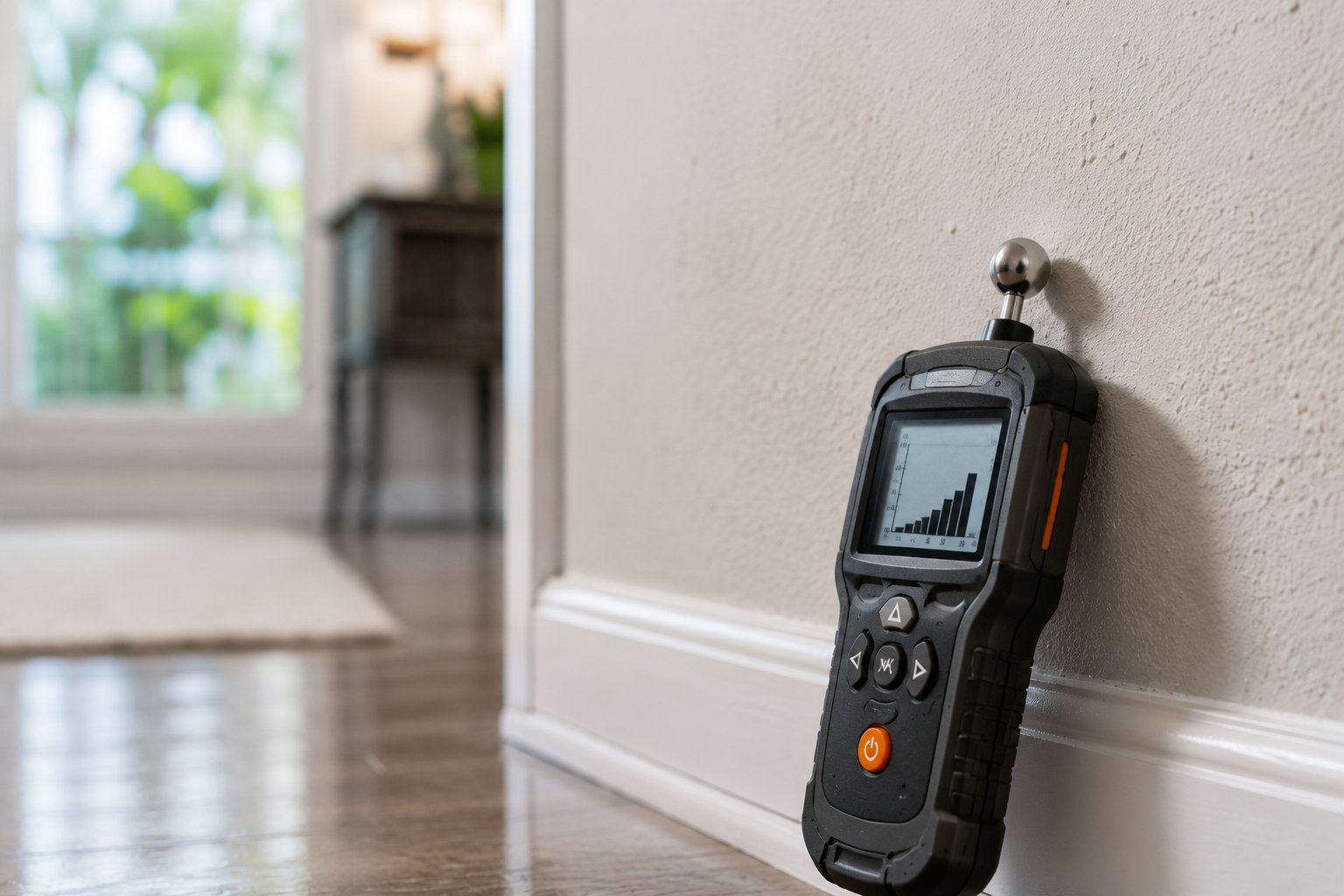
Mold inspection is usually the first step when the source, location, or extent of a mold or moisture concern is unclear.
- You suspect mold but cannot see visible growth
- There are signs of moisture, leaks, or musty odors
- You want to identify the source of a mold problem
For Jacksonville properties, inspection is often useful when humidity, leaks, attic moisture, crawlspace dampness, or storm-related water intrusion may be contributing to the issue.
What Is Mold Testing?
Mold testing may be useful when sampling could provide additional information about suspected mold, indoor air quality concerns, or conditions that are not clearly visible.
- Additional information is needed about suspected mold
- Sampling may help clarify indoor air quality or hidden-growth concerns
- Documentation is needed for a specific property question
Testing is usually most helpful when it supports a broader evaluation of moisture history, inspection findings, remediation planning, or unresolved indoor air quality concerns.
Key Differences Between Mold Inspection and Mold Testing
| Feature | Mold Inspection | Mold Testing |
|---|---|---|
| Primary purpose | Identify visible concerns, moisture sources, and possible mold-related conditions | Provide sample-based information about suspected mold or indoor air quality conditions |
| Best for | Finding likely moisture sources and affected areas | Clarifying suspected hidden mold, documentation, or sampling questions |
| Typical complexity | Low to Moderate | Moderate |
| Longevity | Helps guide next steps and moisture correction | Snapshot of sampled conditions at the time of testing |
| Cost range | $200–$600+ | $300–$800+ |
Considerations
Pros and Considerations
Inspection and testing can both be useful, but they answer different questions. The right choice depends on whether the property needs source identification, sampling, documentation, or guidance before remediation.
Benefits of Mold Inspection
Mold inspection can help identify visible concerns, moisture sources, and high-risk areas before testing or remediation is considered. This is often useful when musty odors, water intrusion, or hidden moisture are present.
Inspection Considerations
An inspection may not identify specific mold types unless testing is added. It is best used to understand moisture conditions, affected areas, and whether additional services may be needed.
Benefits of Mold Testing
Mold testing may provide additional information when suspected mold is hidden, indoor air quality concerns persist, or documentation is needed. It can support decision-making when visual findings alone do not answer the question.
Testing Considerations
Testing does not correct the moisture source or remove affected materials. Results can also depend on timing, sampling location, ventilation, and current property conditions.
In many Jacksonville homes, inspection and testing work best when they are used to answer a specific property question rather than applied as a one-size-fits-all process.
How Local Conditions Affect Mold Inspection and Testing in Jacksonville
Hidden Moisture and Humidity
Jacksonville’s humidity can allow moisture to remain in walls, ceilings, flooring, attics, crawlspaces, and other enclosed areas after the original source is no longer obvious. Inspection may help identify where moisture is present, while testing may be considered when additional information is needed.
Indoor Air Quality and Odor Concerns
Musty odors, stale indoor air, or recurring indoor air quality concerns can be difficult to trace without reviewing the property conditions. An inspection can help identify likely moisture sources, while testing may help clarify suspected mold-related conditions when the concern is not visible.
Water Intrusion and Storm History
Heavy rainfall, tropical storms, roof leaks, plumbing issues, and drainage problems can leave hidden moisture behind building materials. Properties with recent water intrusion may need inspection first, with testing added when sampling or documentation would help clarify the next step.
Attics, Crawlspaces, and Enclosed Areas
Attics, crawlspaces, and other enclosed areas can trap humidity and limit airflow. These areas often need moisture review before deciding whether testing, remediation, or water damage restoration is appropriate.
These local conditions make the choice between inspection and testing more practical: inspection helps identify where the issue may be coming from, while testing may provide additional information when the concern remains unclear.
Understanding the risks can help you decide when to act.
You may want expert input if:
Cost Differences Between Mold Inspection and Mold Testing
Costs can vary depending on the property, access conditions, sampling needs, moisture history, and whether additional services are needed after the evaluation.
Mold Inspection Costs - Mold inspection usually focuses on reviewing visible concerns, moisture sources, affected areas, and property conditions. It may involve lower upfront cost when the main goal is to identify where the problem is coming from.
Mold Testing Costs - Mold testing may involve additional cost because sampling, laboratory analysis, and result interpretation can be part of the process. Testing may be most useful when documentation, indoor air quality concerns, or hidden mold questions need additional clarification.
For broader pricing context, review the mold remediation cost guide before requesting a property-specific estimate.
When to Request Professional Guidance
Professional guidance may be useful when the source of moisture is unclear, mold concerns keep returning, indoor air quality concerns persist, or you are unsure whether inspection, testing, remediation, or water damage restoration should come first.
- Musty odors continue after cleaning or ventilation
- Moisture concerns appear after storms, leaks, or water intrusion
- Visible staining or suspected mold appears in hidden or enclosed areas
- You need help deciding whether inspection or testing is the right first step
- Documentation or sampling may be needed before remediation planning
A licensed local mold assessor or qualified mold inspection professional can help review the property conditions and determine whether inspection, testing, or another service is appropriate.
Helpful Resources for Choosing the Right Next Step
Choosing between mold inspection and mold testing often depends on what is visible, where moisture may be hidden, and whether sampling would provide useful information. These related pages can help you compare the next step for your Jacksonville property.
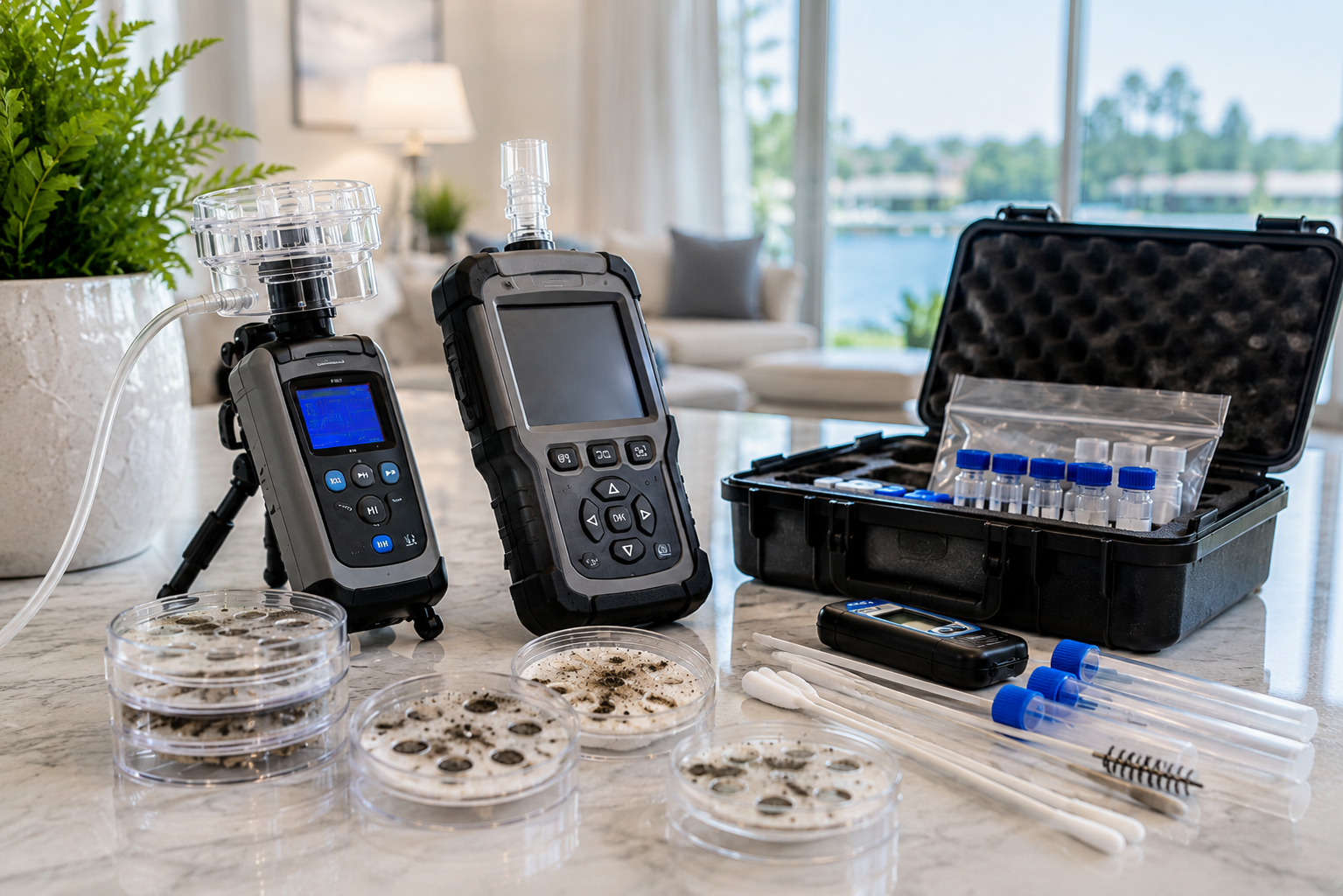
Use when sampling, documentation, or indoor air quality clarification may be useful.

Use when odors, stale air, humidity, or hidden moisture may be part of the concern.
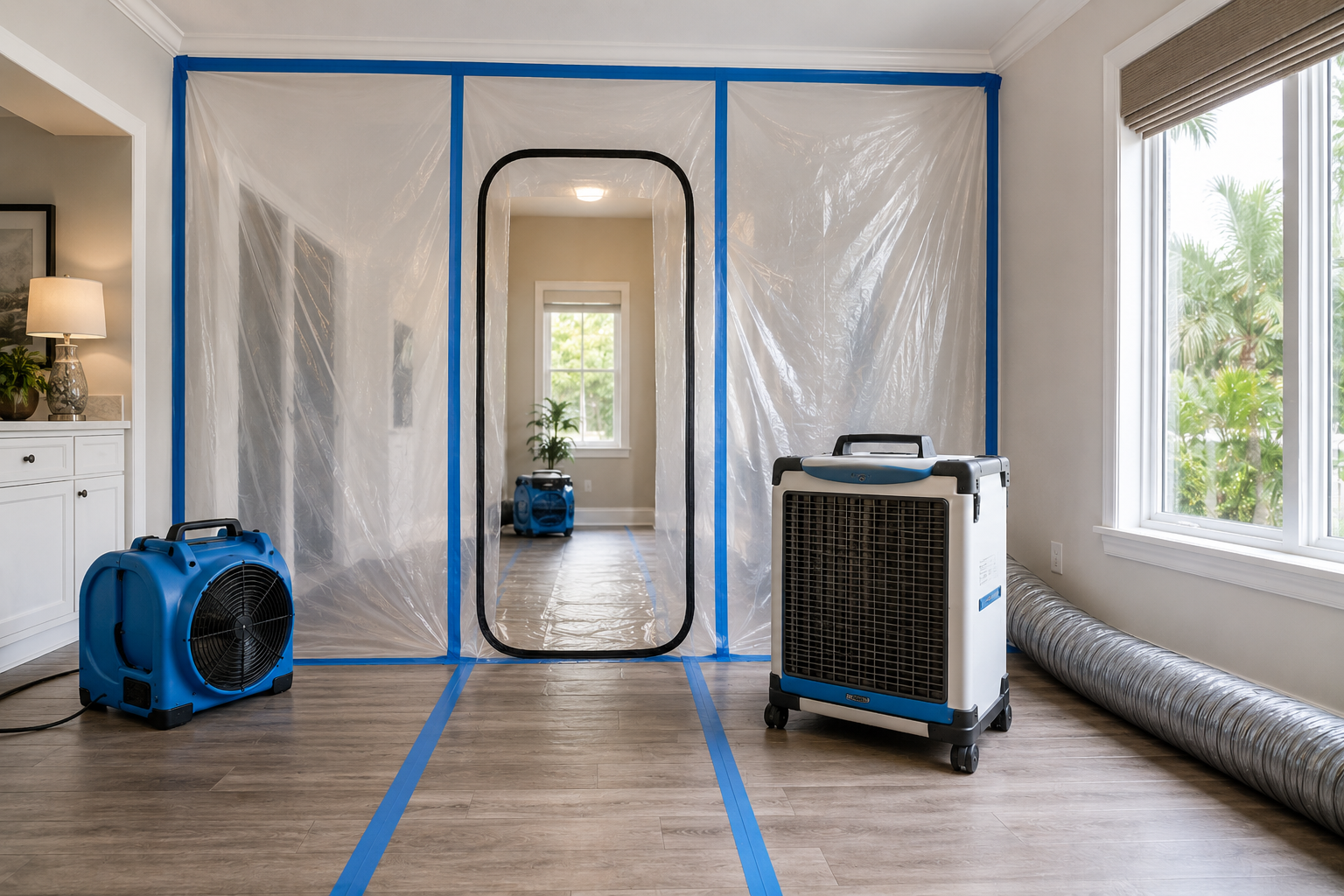
Use when inspection or testing points to affected materials or a remediation scope.
Request Guidance on Mold Inspection vs. Mold Testing in Jacksonville
If you are deciding between mold inspection and mold testing, requesting guidance can help clarify whether the property needs source identification, sampling, remediation planning, or water damage review.
Include the property location, where the concern appears, whether you have noticed musty odors or visible staining, and whether there has been recent water intrusion, roof leakage, plumbing damage, or elevated humidity.
Connect With a Local Mold Professional
If you are unsure whether mold inspection, mold testing, or both may be appropriate, a licensed local mold assessor or qualified mold inspection professional can help review your symptoms, moisture history, and property conditions. This can be especially useful for Jacksonville homes affected by humidity, musty odors, hidden moisture, or water intrusion.
Request an Estimate
Thanks for contacting us! We will be in touch with you shortly.
Please try again later.
Mold Inspection vs. Mold Testing FAQs
Should I start with a mold inspection or mold testing in Jacksonville?
In many situations, a mold inspection is a practical starting point when the source of moisture or the affected area is unclear. An inspection can help identify visible concerns, possible hidden moisture, musty odors, water intrusion, and conditions in areas such as attics, crawlspaces, walls, or beneath flooring. Mold testing may be considered when additional information, sampling, or documentation is needed.
Can Jacksonville’s humidity or recent water intrusion make a mold inspection more useful?
Yes. Jacksonville’s humidity, heavy rainfall, seasonal storms, plumbing leaks, and roof-related water intrusion can allow moisture to remain in building materials long after the original event. When the cause of a concern is uncertain, an inspection can help identify whether hidden moisture, ventilation issues, or affected materials may be contributing to the problem.
When may mold testing be helpful in addition to an inspection?
Mold testing may be helpful when further clarification is needed after an inspection, when visible conditions are limited or unclear, or when a property owner wants additional documentation about suspected mold-related conditions. Testing can also be considered when indoor air quality concerns persist, although the appropriate next step depends on the specific property and moisture history.
Can mold inspection and mold testing be used together?
Yes. In some situations, an inspection and testing may be used together. An inspection can help identify likely moisture sources and affected areas, while testing may provide additional information when confirmation or documentation is appropriate. This combined approach may be considered after recurring water damage, storm-related moisture, persistent odors, or concerns involving hidden areas of the home.
What happens after a mold inspection or mold test identifies a concern?
The next step depends on what is found. A moisture source may need to be addressed through repairs, drying, ventilation improvements, or water damage restoration. When mold growth or affected materials are identified, remediation may be recommended to address the contamination and help reduce the likelihood of the issue returning.